


Upgrading Hokkaido Rice to ‘First Class’
 2011.03.08
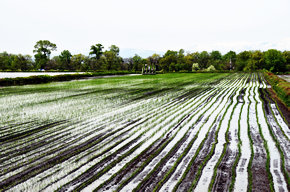
 12th Public Relations Society of Japan Awards 2009Grand Prix
- PR WEEK Awards Asia 2010Business-to-business campaign
- IPRA Golden World Awards for Excellence 2010Category: Communication Research
Campaign Summary
For years, Japanese always rated rice from Niigata as their most preferred over that from Hokkaido, Japan’s northernmost island. New strains and better quality did little to boost Hokkaido rice’s popularity. Also, Hokkaido farmers faced financial difficulty because it commanded no price premium. In October 2005, the Hokkaido Rice Promotion Committee approached PR Consulting Dentsu (PRCD) to promote their product. The four-year campaign made Hokkaido rice amongst Japan’s most popular. National airlines served it to first class passengers. Most importantly, the market price for Hokkaido’s Yumepirika, debuted in 2009 surpassed the leading brand from Niigata, Koshihikari.
Statement of the Problem/Opportunity
Traditionally, producing rice in Hokkaido was difficult because of the island’s long, cold winters. However, in 1980 after many years in development, the delicious Kirara 397 variety which is resistant to the cold climate was born. Hokkaido eventually became Japan’s leading rice producing prefecture, topping rival Niigata. Its rice brands such as Nanatsuboshi and Hoshi No Yume won Hokkaido rice an A rank (second out of five) from the Japan Grain Inspection Association in 2004. And yet wholesale prices of Hokkaido rice remained low. That year the price of Japan’s leading rice brand, Niigata’s Koshihikari, was 19,138 yen per 60 kilogram while Akita prefecture’s Akitakomachiwent for 15,646 yen. Yet Hokkaido’s Kirara 397 only managed 12,888 yen, a price that could not even recoup farmers’ production costs.
The low market price caused Hokkaido rice farmers to struggle financially.
In October 2005, the Hokkaido Rice Promotion Committee approached PRCD to improve the situation for the prefecture’s rice farmers and to build Hokkaido’s image as the origin of Japan’s best rice. By lauding the attributes of each rice variety to boost the overall brand, the goal was to ensure that Hokkaido rice could enjoy an appropriate retail price based on its high quality.
Research
To truly understand the situation, in June 2007 the agency conducted a survey of 500 Tokyo consumers. 80% of respondents selected Niigata prefecture for “the region that comes to mind for rice”. Only 6% answered Hokkaido. Some 76% selected Koshihikari as “the rice variety that comes to mind for taste”, with only 15% nominating Hokkaido. Unhappily, Hokkaido rice scored highest – 33% – for “a budget rice that comes to mind”. The data made abundantly clear that Hokkaido rice was not known for its taste.
Planning
- Strategy
- To convey the great taste of Hokkaido rice to consumers and distributors, the agency proposed a project to reach consumers’ minds, hearts and taste buds.
- It proposed conducting a collaborative survey with highly reputable Hokkaido University to create objective data about the taste of Hokkaido rice. Food-product tasting surveys usually involve a panel of around 40 people. However, to ensure that the survey results were thoroughly robust, the agency decided to recruit 300 tasters in Tokyo.
- Key messages
- The agency focused on three key messages to reach the minds, hearts and taste buds of target consumers and distributors, namely:
- (1) “Consumers base judgment about taste on the brand name.” (minds)
- (2) “Hokkaido rice farmers put passion into their rice.” (hearts)
- (3) “Hokkaido rice tastes great.” (taste buds)
- Key Opinion Leaders (KOLs)
- The agency utilized KOLs such as Associate Professor Shuzo Kawamura of Hokkaido University’s Faculty of Agriculture, to convey the key messages objectively.
- Target
- The target was consumers and distributors, chiefly house wives in Tokyo.
Execution
1. Taste test
In 2008 and 2009 the agency organized a taste test for 300 consumers in Tokyo. In the 2009 blind taste test, based on the taste standard Hoshinoyume (0.00), Hokkaido brands Yumepirika (0.32), Fukkurinnko (0.18), and Hoshinoyume (0.00), scored higher taste points than Niigata’s Koshihikari (-0.03) and Akita’s Akitakomachi (-0.15).
When the testing was conducted with the brand names revealed, rankings reversed, with Koshihikari and Akitakomachi scoring +0.79 and +0.77 respectively, and Hokkaido’s Kirara 397 and Fukkurinko scoring only +0.27.
This proved the agency’s theory and supplied objective data confirming that consumers were judging taste based on brand name.


2. Media list
Rather than using existing food-related journalists to deliver its message, the agency checked the byline articles about rice written by economic journalists and compiled a list of 450 reporters interested in receiving information about rice to whom press kits were sent. In this way, wider coverage of Hokkaido rice developers, growers and retailers was achieved.
3. Newsletter and PR magazines
A series of six newsletters was sent to the journalists beginning in August 2006 to deliver results of the survey conducted with Hokkaido University. Three annual PR magazines beginning in 2007 were also sent to the 450 journalists. These magazines explained the characteristics of major Hokkaido brands and included interviews with growers discussing their passion and struggles for growing rice. The newsletter and PR magazines were also sent to distributors and retailers.
4. Sampling event/Seminar
The agency tied-up with a restaurant in Tokyo and held tasting events and seminars aimed at the media reporters from August 2007 to September 2009 in total of 13 times. 63 journalists attended the events and experienced the taste of Hokkaido rice first-hand.
5. Press tour
Media attending the tasting event who showed interest were invited on a press tour to witness planting and harvesting. Interviews with growers were also arranged. Associate Professor Shuzo Kawamura of Hokkaido University agreed to be interviewed for the press tour. He explained the delicious taste of Hokkaido rice based on study results.
Campaign Outcomes/Monitoring and Evaluation
- 1. In 2005 Japan’s national media carried only 876 articles related to Hokkaido rice. After four years of media relations activities, the total was 1,234 in 2009 with total media impression of 854894139. Most drew upon the materials the agency provided, indicating that the key message was conveyed to consumers. The coverage included TV spots featuring consumers commenting after sampling that Hokkaido rice is tasty. Also, major national newspaper Asahi Shimbun with the circulation of 8 million wrote an article about the rice including the two key mesasges the agency conveyed that consumers were judging taste based on brand name “Hokkaido rice tastes great.”
- 2.The campaign helped Hokkaido rice prices to rise Prices for 60 kg in 2005 and 2009 Kirara 397 : 12,888 yen – 14,525 yen Hokkaido’s Yumepirika, which debuted in 2009 surpassed rival Koshihikari in market price.
- 3. In October 2009, Japan Airlines began serving Fukkurinkoin first class meals on three domestic routes. In December 2009, Yumepirika replaced Niigata’s Koshihikari in first and business class meals on eight All Nippon Airways (ANA) international routes including to New York and London. ANA won the 2008 and 2009 IATA ICQA Platinum Award for the highest quality in-flight meals. Being chosen by ANA is a testament to Yumepirika’s quality.
- 4. In late 2009, Isetan, an upscale department store in Tokyo started sales of Hokkaido rice.
- 5. One outcome signifying the success of the rebranding campaign is the interest shown by other prefectures. Niigata growers expressed interest in Hokkaido’s success and in the summer of 2008, sent a delegation there. Yamagata prefecture also created a specialized group overseeing rice production and launched a new brand. Hokkaido’s success has led to the debut of many other ‘tasty’ rice brands and is rewriting Japan’s rice rankings.
Related materials

Company Brochure
This is the company profile of Dentsu PR Consulting. This document clearly summarizes our philosophy, services, strengths, and achievements. It introduces our efforts in supporting companies and organizations in solving their challenges across a wide range of areas, including PR strategy, digital initiatives, and risk management, with reputation management as our core focus. Please use this as a reference when considering your company’s public relations and communication strategy. (15 pages total)

About Our Global Promotion and Communication Support
PR Consulting Dentsu’s global PR support is distinguished by its strategic planning that takes into account the differences in PR environments and cultural backgrounds across countries and regions, as well as by its strong execution capabilities. We offer public relations and communication support tailored to the specific needs of Japanese companies aiming to expand into overseas markets, and for international companies seeking to enter the Japanese market. In response to the rapid evolution of digital technology and social media, we also provide one-stop PR solutions that cover the entire process—from strategic planning and execution to performance evaluation.
Related services & areas


Related works
Hitachi, Ltd.
Articulating “Hitachi-ness”: What Makes Hitachi Unique
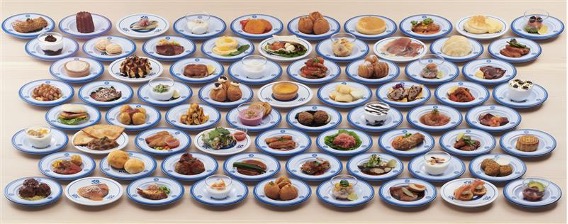
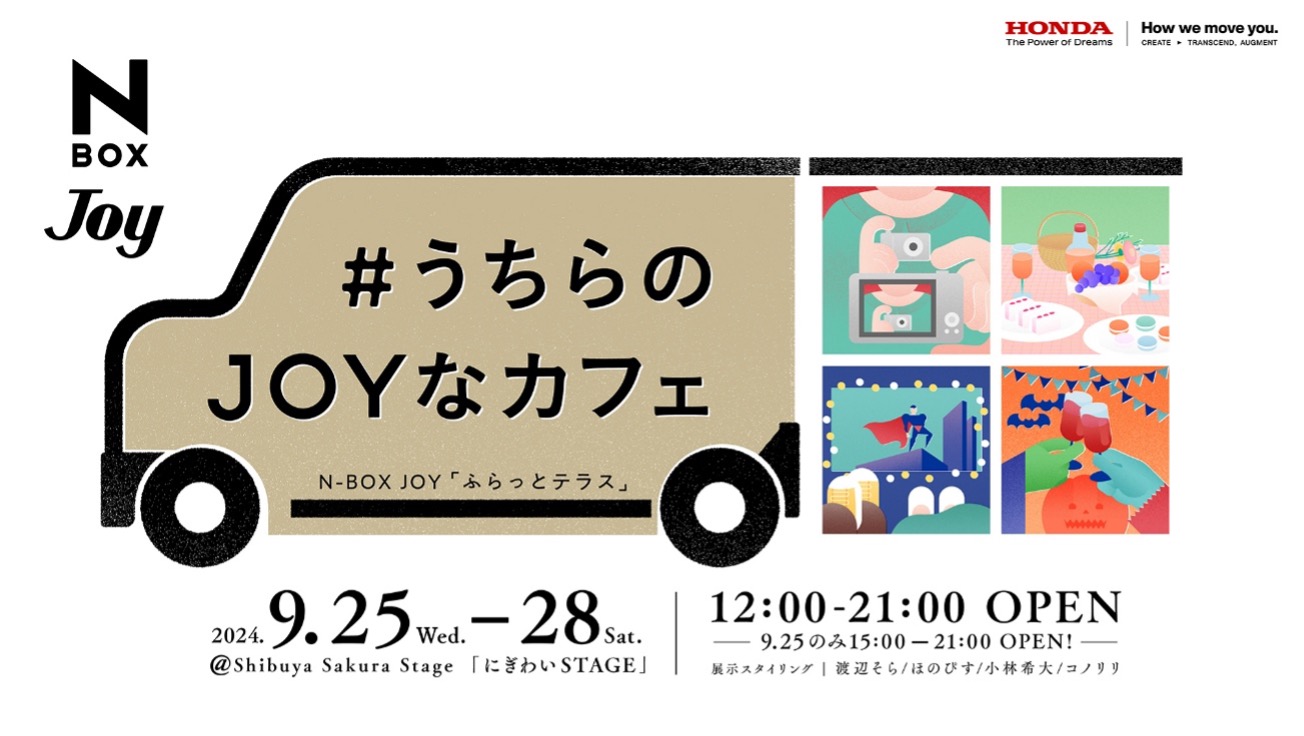
Honda Motor Co., Ltd.
Our JOYful Café by N-BOX JOY
Japan Airlines Co., Ltd.
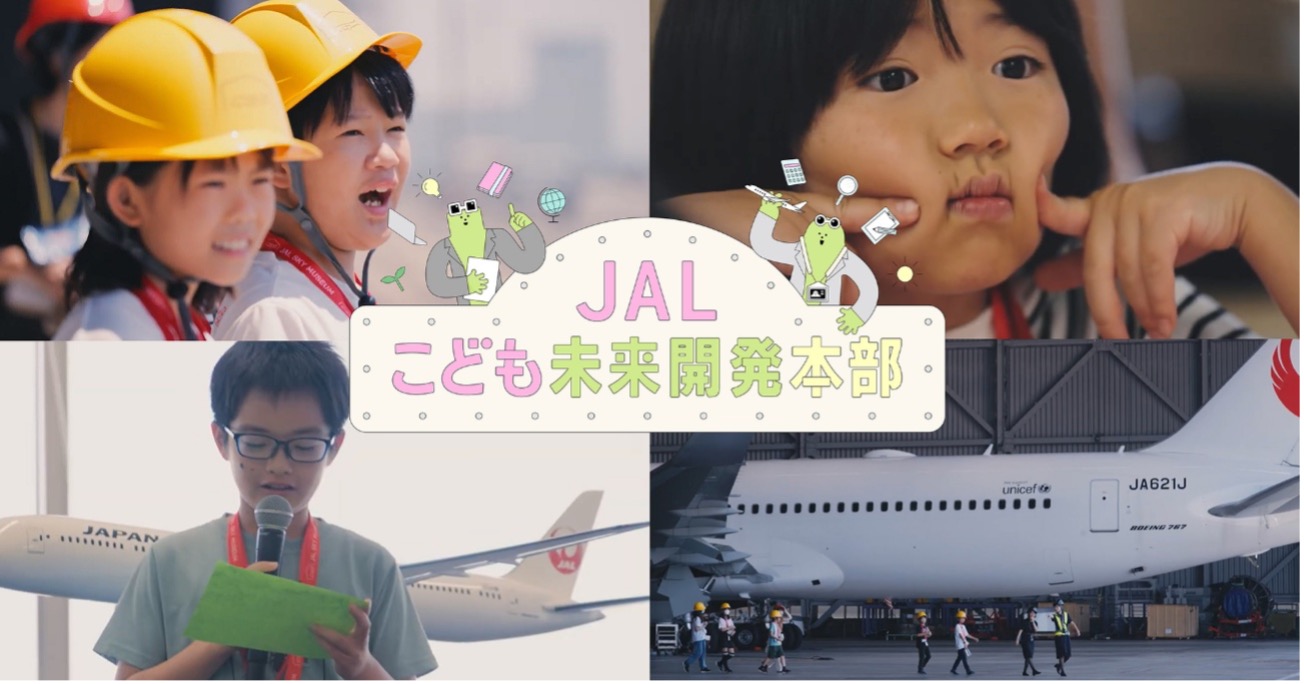
JAL Children’s Future Development Headquarters

Honda Motor Co., Ltd.
OuTDooR Hunting Card by VEZEL

Honda Motor Co., Ltd.
WR-V Meets

BANDAI SPIRITS Co., Ltd.
“Super 20th Anniversary” Project
Japan Airlines Co., Ltd.

