



The future of corporate museums as a PR asset #15 Zenrin Museum
 2023.07.27
 2026.05.23
Corporate museums are part academic and business and occupy the grey zone in between. It is an organization that works with several departments in a company including public relations, branding, advertising, and HR. This series aims to look at the role, function, and future of museums run by corporations through interviews with PR professionals.
Corporate PR that doesn’t talk about itself
While corporate museums may be categorized in various ways, some exhibit records of the development of a company’s industry and its community along with product displays and those that pass down culture through collections the company has accumulated relating to its business. This article offers an introduction to Zenrin Museum, which does just that, and considers how Zenrin is building thought leadership through its museum.
Entrance to the Zenrin Museum (Photo courtesy of Zenrin Museum)

Kanoko Kimura, PR Consulting Dentsu Inc.
Introduction
What is the purpose of a map? Is it to look up the names of places and check the topography? To study the route to a particular destination? The digitalization of various services has made maps inseparable from our daily lives. Because they have become so familiar to us, it has become difficult to see their essential appeal. To convey the appeal of maps and their culture, there is a corporate museum planned, produced, and operated by map-loving employees who dare to exclude introductions to its company’s services and the transitions it has been through.
This article introduces Zenrin Museum, Japan’s only corporate museum focusing solely on maps. It is operated by Zenrin, Japan’s largest provider of various services based on map information and the only corporate museum in Japan that focuses on maps alone—located in Kokura, Kitakyushu, where Tadataka Ino is said to have taken the first steps in surveying Kyushu in 1800 on his way to creating the first accurate map of Japan’s coastline. The museum was established in June 2020 to pass down and promote the culture of maps. It is located at the former site of the Zenrin Map Museum, which offered an exhibition on valuable documents on maps, Zenrin’s initiatives, and its products to the general public.
What is Zenrin, anyway?
As mentioned above, Zenrin is the largest company in its industry in Japan. Its beginnings were in sightseeing guide booklets. The company was founded in 1948, shortly after the end of World War II, as Kanko Bunka Senden-sha (a company that advertises tourism culture). The following year, the company’s founder, Masatomi Osako, published a tourist guide called Nenkan Beppu (annual Beppu) in Beppu, Oita Prefecture, which had survived the war and was bustling with tourists.
The booklet was substantial, with articles introducing famous places and various columns. However, tourists appreciated the urban area map included as an appendix. Osako then decided that “a map was a most important source of information” and set out to produce residential maps of places throughout Japan, taking a cue from old maps from the Edo period that even had the names of stores written on them.
In 1950, the company changed its name to Zenrin Shuppansha and published its first residential map, Beppu City Residential Guide Map, in 1952. People began using it for deliveries, public offices used it, and in 2017, the company completed the development of residential map data for the entire country from its Kitakyushu location. Thus began its journey as an infrastructure supporting Japanese society.
Around 1984, the company was one of the first to promote digitalization, and in 1990 developed the world’s first GPS car navigation software. The company currently promotes the operation of a space-time information system that systematically manages various types of information in the world on a spatial and temporal axis.
The choice to remove corporate elements from the corporate museum
From 2003 to 2019, Zenrin operated its Map Museum, a resource center that introduced and familiarized people of all ages with the pleasures of maps. Besides offering a look at its map collection, company products, and initiatives to visitors, Zenrin’s products and initiatives were also displayed.
However, the renovated Zenrin Museum has almost no information on the company’s history, product displays, production process, or latest services. Why is it that the corporate elements of a corporate museum have been drastically eliminated? As a map company, Zenrin had a strong sense of mission to convey the appeals of maps to people and to connect their culture to the future.
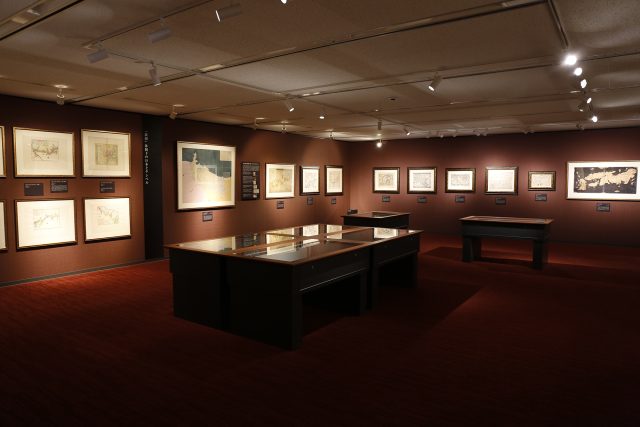
(Zenrin Museum, Chapter 1 (Photo courtesy of Zenrin Museum)
In addition to the enjoyment of seeing and learning the names of places and landforms on a map, there is another way to enjoy maps: To learn about the history of life, the world, and various social movements at the time based on the reasons why and how the map was created. That is not surprising. Maps have supported people’s lives as a communication tool since around 700 B.C.
To convey these essential appeals of maps, the company felt it necessary to have visitors take plenty of time to look at maps and the history they reflect. It said the museum did not need to introduce the company’s efforts, which are only a small part of the history of maps. Thus, under the concept of “a museum of maps reflecting history,” the Zenrin Museum now presents only domestic and international maps from B.C. to the present day.
Magnifying glass required: History as read in maps
The Zenrin Museum consists of a permanent exhibition of about 120 works across three chapters and special exhibits with themes that change depending on the period. The three chapters of the permanent collection shows how Japan was involved with and perceived by the Western world. The first and second chapters show the sequence of events from the early 16th century, when imaginary Japan was first mapped, to the appearance of Ino-zu maps, named after a renowned surveyor and cartographer, after which many countries gradually began accurately depicting Japan.
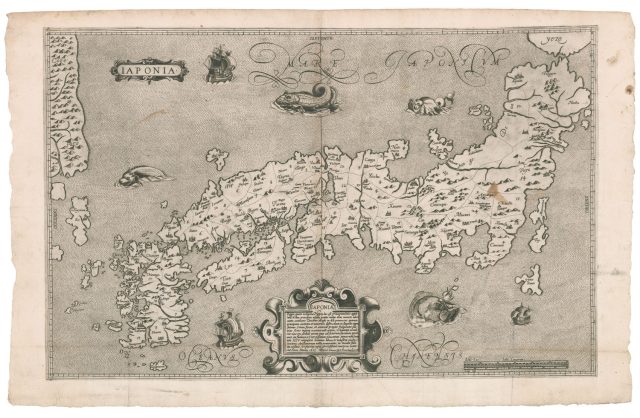
“Japan Map” by Blanks/Moreira (Photo courtesy of Zenrin Museum)
Chapter 3 introduces the diversification of expressions and uses of maps to the present day. The number of maps may sound simple, at around 120 items, but the content volume is large, as one can read from each map not on the historical background at the time of creation but also the actions and personalities of the people who created them. In addition to names of places and topography, the maps are also filled with information, such as the drawings, worth reading in considerable detail.
For that reason, magnifying glasses are available free of charge so visitors can observe the framed maps up close instead of simply glancing at them. Furthermore, the museum has a calm and quiet atmosphere, allowing visitors to take their time to view the maps. Due to the abundance of exhibits and the fine environment, many visitors say they can only finish seeing some displays in a day and return over a few days.
The Z Curators who supports the Museum
The most significant feature of Zenrin Museum is that five dedicated curators staff called Z Curators, each qualified as a curator and responsible for the overall operations of the museum, from the planning and producing exhibitions and guided tours to speaking at events and public relations.
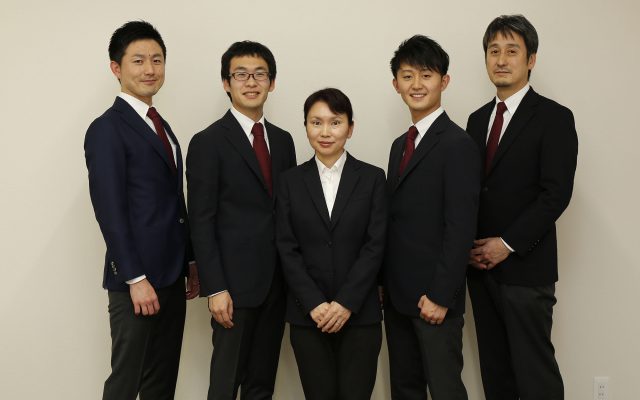
(Z Curators Photo courtesy of Zenrin Museum)
Z Curators are Zenrin employees selected through an in-house recruitment process for the museum’s establishment. These staff members love maps and enjoy working with people and were gathered from departments unrelated to the museum or public relations. Wataru Sato (far right in the photo), the museum director who told us about the museum in our interview, is one of them. He says he has loved maps since childhood. He became interested in working at a museum and obtained certification as a curator during his student days and joined Zenrin with a strong desire to be involved with maps. After joining the company, he worked in sales until hearing about an open call for Z Curators. He raised his hand for the role and now serves as museum director.
In establishing the museum, Z Curators did everything themselves without outsourcing—from content planning for today’s permanent exhibition to creating all 89 map captions. Because of that, the map descriptions are detailed, abound with the thoughts of the Z Curators, and are substantial. Unlike recorded audio guides, the Z Curators can communicate directly with visitors. They can offer explanatory methods in line with visitors’ interests and level of understanding, giving an impression of their strong desire to share the appeals of maps.
To reach deeper and more broadly
Operated with a particular focus on its concept, the Zenrin Museum attracts map enthusiasts from all over the country and many local visitors. The company also invites its new employees and business partners to visit the museum to become aware of the company’s latest technology and the appeal of maps in themselves. It also leverages its collection of some 14,000 old maps to cooperate with investigations and research by historical and cultural researchers. It holds virtual tours, lectures, and regional conventions collaborating with the Cartographic Society of Japan. It is clear that on the academic side, the museum also contributes to the inheritance and promotion of cartographic culture.
Zenrin’s passion for maps is not limited to its permanent exhibition. In its special collections, maps specialized in various genres, such as time periods, regions, transportation, and sightseeing convey a deeper appeal of maps that cannot be fully communicated in the permanent exhibition. The Z Curators are also responsible for planning and producing such special exhibitions, reflecting on requests received from visitors. An exhibition of rail and other transportation maps was held at the time of this interview in July 2022, bringing together many fans of railroads and trains.
And outside the museum—
Zenrin Museum collaborates with the local community and holds special events and projects. Kokura Castle is located next to the museum, and during certain times of the year, it has a Special Night Museum x Night Castle Tour. Visitors can enjoy a guided tour led by a Z Curator, the café attached to the museum, a bar in the castle tower of Kokura Castle, and night views from the two venues.
Furthermore, a collaborative lodging room, Map Sanpo Room (room for taking map walks), has been set up as a joint project with JR Kyushu Station Hotel Kokura (from March 1, 2022 to February 28, 2023). This is a room where visitors can immerse themselves in maps. Surrounded by various maps and other map-related items, guests can enjoy comparing the view from the window against a map in the room. This unique contribution to the local community leverages maps and topography that only Zenrin, which originated as a tourist information company, can provide.
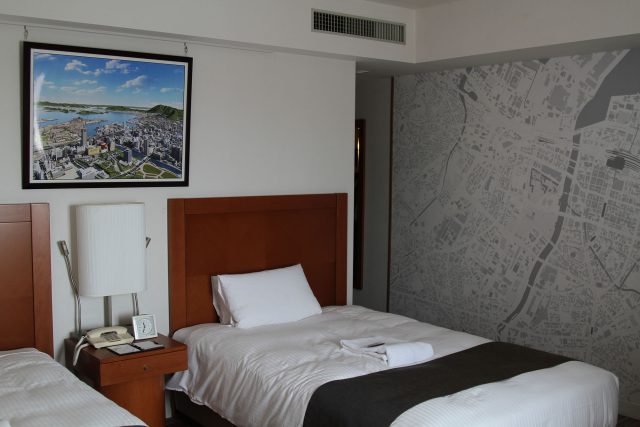
Image of Map Sanpo Room at JR Kyushu Station Hotel Kokura (Photo courtesy of Zenrin)
Corporate PR that doesn’t talk about itself
Among the various types of corporate museums that exist are two types. One exhibits records of the development of the company’s industry or region, along with its products and history, and the other passes down culture through collections the organization has accumulated in connection to its business. These are not works of art that have nothing to do with the company’s business. They are strictly collections that concern the company’s business.
The latter is not necessarily related directly to a company’s business but is based on the idea that the inheritance of the culture as something valuable will indirectly contribute to developing its business. And indeed, Zenrin Museum is a corporate museum that passes down culture.
Maps have been used as a communication tool since the first century B.C. Zenrin has carried on the existence of maps to this day and transformed them into something that better suits the modern age. At Zenrin Museum, which brings the long history and culture of maps to our modern eyes, visitors can sense Zenrin’s passion and commitment to maps. While the museum may be a humanistic corporate museum that does not talk about itself, it exists as a communication tool for Zenrin, a thought leader in the mapping industry trusted by society.
Although Zenrin Museum was established during the COVID-19 pandemic and forced to operate under restrictions, we could feel Zenrin Museum Director Wataru Sato’s enthusiasm for further upgrading the museum based on various opinions received from visitors. He also said that Z Curators have many project ideas that they would like to give shape to. We would like to keep an eye on the multifaceted development of Zenrin Museum in the future.


