



The future of corporate museums as a PR asset #11 INAX Museums
 2023.07.07
 2026.05.23
Corporate museums are part academic and business and occupy the grey zone in between. It is an organization that works with several departments in a company including public relations, branding, advertising, and HR. This series aims to look at the role, function, and future of museums run by corporations through interviews with PR professionals.
INAX Museums—putting into practice the concept of “a company as a public institution of society“
Tokoname-yaki, one of Japan’s Six Ancient Kilns, refers to Tokoname pottery that has been produced in the city of Tokoname, Aichi, since the Heian Period. With Tokoname-yaki as its foundation, INAX (called LIXIL today) developed as a company that makes stoneware pipes, tiles, sanitary ware, and other housing fixtures. Through INAX Museums, which investigates, researches, restores, preserves, manages, and exhibits valuable pottery with the mission of passing down and evolving pottery culture, here is an introduction to the company’s corporate attitude of cherishing the concept of learning from the past and the museum’s contribution to society.

Akemi Sakurai, PR Consulting Dentsu Inc.
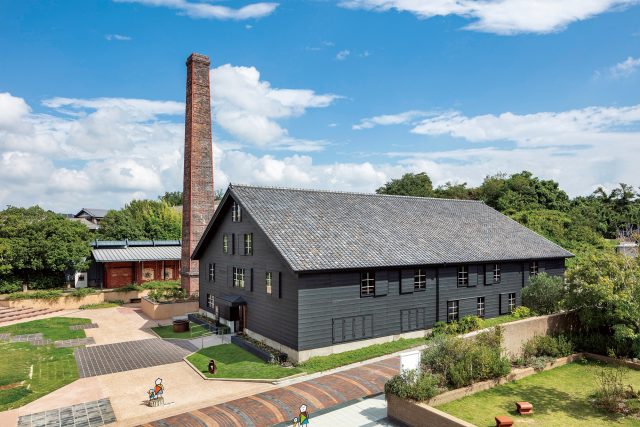
Exterior view of Kiln Plaza, a square and museum with a kiln (Photo courtesy of INAX Museums)
INAX Museums began in 1986 when Teruzo Ina, then president of INAX, opened Kiln Plaza as a cultural facility to introduce the modern industries of Tokoname. It was the year after the company name changed from Ina Seito to INAX.
The founder, Chozaburo Ina, advocated that “a company is a public institution of society.” That sentiment was passed down to his son, Teruzo, and embodied in establishing cultural facilities. As a result, Kiln Plaza was opened, followed by gradual expansions to the facilities, and 2006 saw the grand opening of INAX Museums. Today, the facility has six facilities, including Kiln Plaza, the Tile Museum, the Architectural Terracotta Museum, Clay Works, Tiling Workshop, and Ceramics Lab, as well as a restaurant and a museum shop.
The general theme is clay, water, and fire. The concept is that “Clay obtains water, is given a useful form, and passes through fire to become ceramics. Explore the many-faceted world of clay and ceramics at INAX hands-on museums. See, touch, feel, learn, and create. ”
Situated about six minutes by car from Tokoname train station, INAX Museums is central to many pottery-related facilities scattered throughout the city. Before COVID-19, about 70,000 people visited each year: residents, customers, suppliers, employers, and museum staff, with some 50,000 visiting in 2021 during the pandemic, equivalent to the city’s population of approximately 60,000. The museum is also used as a destination for field trips for elementary and junior high schools, with an average of four out of the nine schools in the city visiting each year.
The facility promotes an understanding of Tokoname City and LIXIL, a company that engages in Tokoname-yaki and monozukuri, or the art of making things, to residents, general visitors, and customers while also serving as a venue for collaboration and exchanges of ideas for people associated with other museums. For architects and designers, it offers a place for co-creation and challenge, and for employees, it is a venue to nurture a sense of mission and pride in the company as it aims to create homes that will enrich people’s lives.
A company must be an economic as well as cultural institution.
LIXIL was born in 2011 through a merger of five companies including INAX and TOSTEM, and makes pioneering water and housing products that make better homes a reality for everyone, everywhere.
Teruzo initiated a major transformation from the country’s number one tile manufacturer to a housing equipment manufacturer that focuses on sanitary ware, and his introduction of innovative products, such as the now standard warm water bidet toilet, has made him known as the founder of INAX. In 2022, he was awarded the Architectural Institute of Japan’s Cultural Prize for his achievements in improving architectural culture through the collection and exhibition of architectural ceramics (tiles and terracotta) and in publicizing their cultural value through the publication of books.
According to Akemi Onouchi, director of the museum who showed us around the facilities, “Teruzo Ina’s view is that a company’s economic activities must have cultural dimensions. For our company, which deals with products which are closely associated with people’s daily living, it is important that every one of our employees, who aim to offer products and services that contribute to comfortable homes and enriched lifestyles, has an interest and deep understanding of daily living and architectural culture.”
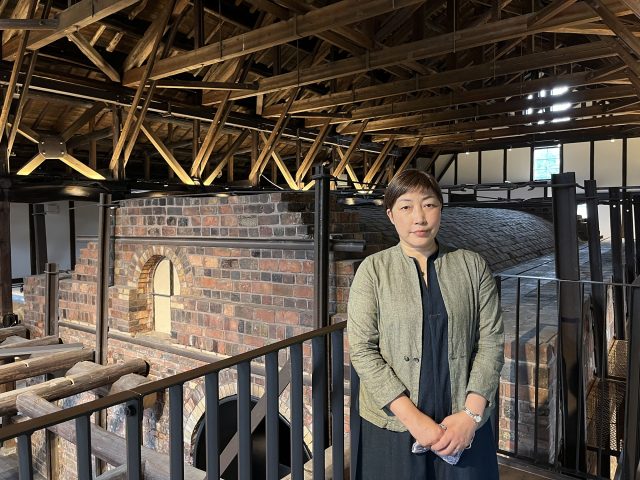
Akemi Onouchi at INAX Museums
Kiln Plaza and a museum with a kiln: Modernization and the establishment of stoneware pipe production
The first Kiln Plaza was built in 1921 by the Kataoka Masaru Seito Ltd., which manufactured stoneware pipes, shochu bottles, and clinker tiles (thick, durable flooring material) until 1971. INAX, adjacent to the museum, preserved and opened it to the public in 1986, then later purchased it. The chimney, a symbol of the Tokoname ware stoneware pipe factory, the brick kiln, and the building’s framework with thick beams and pillars, are of high architectural value, and the building is a registered tangible cultural property and is recognized as a Heritage of Industrial Modernization of Japan.
Ceramics will retain unchanged quality if it does not crack or chip. Stoneware pipes used for long periods require strength, durability, and precise standards that enable them to be connected. For example, Tokoname stoneware pipes were used for sewage pipes to be buried in foreign settlements in Yokohama during the Meiji period. Initially, the quality had been poor, with some parts brittle, as they had been created manually. After trial and error, mechanization was introduced to produce robust stoneware pipes of superior quality, and Chozaburo Ina promoted this mechanization and quality control.
Tokoname-yaki stoneware pipes were actively used during Japan’s modernization to combat epidemics, expand railroad networks, and build infrastructure such as water and sewage systems, as well as culverts that facilitated increased production of rice and other commodities and spread throughout the country through shipping on the Chita Peninsula. As a result, Tokoname-yaki ware evolved as an industrial product, and for the first time in 800 years since the Kamakura and Muromachi periods, it once again bloomed as representative pottery used throughout Japan, and stoneware pipe manufacturing flourished as a local industry.
The Tile Museum: Tiles that add color to enhanced hygiene awareness, housing, and living
The Tile Museum began when tile researcher Masayuki Yamamoto donated his collection of approximately 6,000 tiles to Tokoname City in 1991. INAX was contracted to research and analyze the valuable collection accumulated by Mr. Yamamoto over 50 years during his travels around the world, including the Silk Road. The museum’s construction took shape in the process and was opened to the public in 1997 along with the company’s collection.
To help visitors better understand the exhibition and make it memorable, subsequent renovations included introductions to the local culture, scientific evidence, usage situations, and English commentary. A photo of Vermeer’s famous painting, The Milkmaid, is also on display, with painted tiles with the same design as the baseboard tiles depicted in the image.
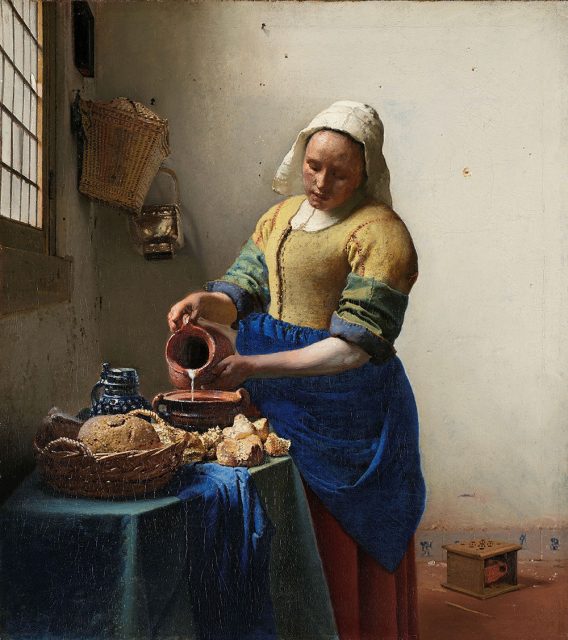
Vermeer’s The Milkmaid – the background is painted in great detail, with Dutch tiles used for the baseboards ⓒRijksmuseum, Amsterdam.
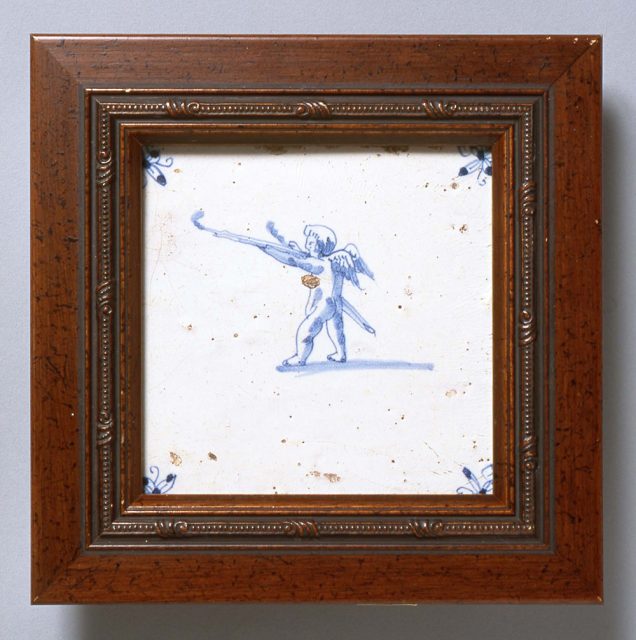
Dutch tiles with the same “child at play” motif as the baseboard tiles above
Here is a reconstruction of the blue tiles that decorated the walls of the underground passage at an ancient Egyptian pyramid completed around 2,650 B.C., believed to be the world’s oldest tiles. Also on display are clay pegs, cone-shaped pottery used to decorate the walls of temples in Mesopotamia further back in time, around 3,500 B.C. The company’s stance as an outfit that makes things is evident in its studies and analyses on these ceramics’ manufacturing methods and ingredients, their re-creation in a state similar to the originals, and their exhibition as an immersive area.
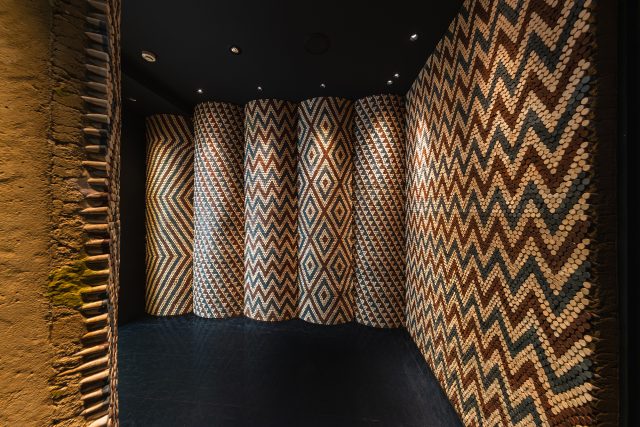
Exhibition area that re-creates the geometric patterns on the walls of the sanctuary using clay pegs (Photo courtesy of INAX Museums)
The year 2022 will mark the centennial anniversary of the term “tile” unification for the ceramic boards that cover walls and floors in Japan. The “100 Years of Tiles in Japan: A History of Its Beauty and Use” traveling exhibition was the first joint collaborative event with other museums. The exhibition traced the history of tiles in Japan and showed possibilities for the future through collaborations with creators, such as 3-D printed tiles.
Encounter with Frank Lloyd Wright and the Architectural Terracotta Museum
The Architectural Terracotta Museum, the latest facility to open at INAX Museums in 2012, displays the dining room columns from the “Imperial Hotel’s old main building” (from Museum Meiji-Mura’s collection) designed by American architect Frank Lloyd Wright. They are a typical example of modern architecture’s highly decorative special bricks from the Meiji and Taisho periods. Chozaburo Ina had been deeply involved in creating the Imperial Hotel’s former main building, and the story is told in a local television drama on public broadcaster NHK called “The Yellow Brick: The Man Who Deceived Frank Lloyd Wright.”
Completed in 1923, the former main building of the Imperial Hotel was constructed of reinforced concrete and brick. The Imperial Hotel had been challenged to realize complex, original, and artistic geometric patterns, a characteristic of Wright’s buildings, with yellow bricks, and procure materials domestically because imported goods were expensive. Furthermore, red bricks were the norm then; yellow bricks were rare, and a few artisans could produce them. Under such circumstances, the production of yellow bricks was entrusted to Kichinosuke Hisada, a potter in Tokoname. However, Kichinosuke died of illness before completing the project, and the Imperial Hotel established a directly managed factory (Imperial Hotel Brick Works) in Tokoname. Chozaburo Ina and his father, Hatsunojo , would take up the challenge of making yellow bricks there.
After the bricks that met Wright’s requirements were successfully delivered, Chozaburo transferred the employees and facilities of Imperial Hotel Brick Works, which had fulfilled its role, to his stoneware pipe factory (Ina Hatsunojo Factory). He then began leveraging the techniques of Tokonami-yaki, which excelled in large-scale pottery, began full-fledged production of stoneware pipes and tiles, building materials indispensable for Japan’s modernization, and founded Ina Seito in 1924.
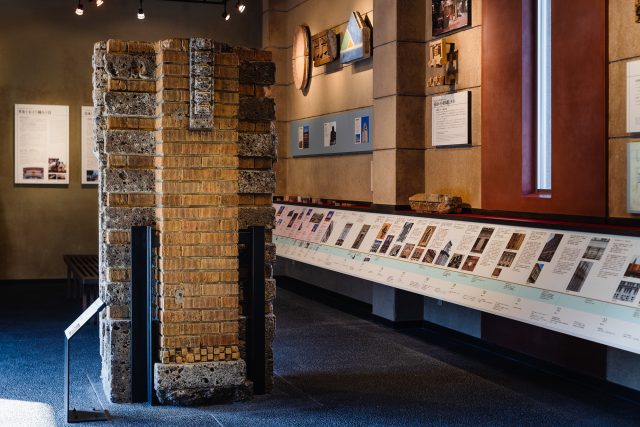
A column used in the dining room in the old main building of the Imperial Hotel (Photo courtesy of INAX Museums)
On display outside Terracotta Park, attached to the Architectural Terracotta Museum, are 15 terracotta masterpieces from the Taisho and Showa periods, including a terracotta work from the Yokohama Matsuzakaya Main Building (4.5 meters high x 1.8 meters wide) and ogre and beast decorations from the Osaka Building No. 1. All of these works were preserved during the reconstruction of the building because of their artistic quality and were handed over to the museum so their architectural culture would be passed down to future generations.
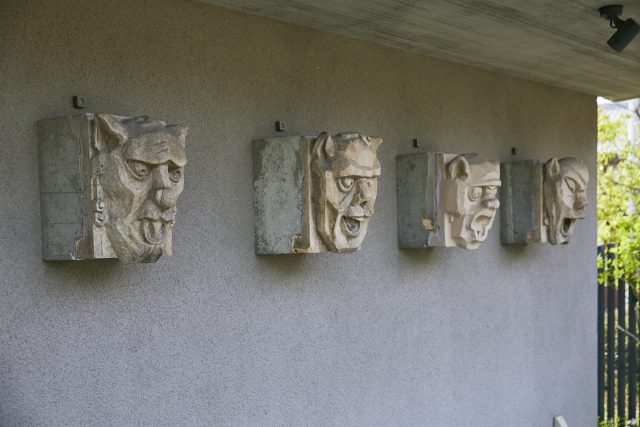
Terracotta ogre and beast masks from Osaka Building No. 1 (Photo courtesy of INAX Museums)
Experiential facilities: Clay Works and Tiling Workshop
At INAX Museums, there are two places where visitors may experience and feel the appeals of clay and pottery through touch, standing out among the facility’s offerings for visitors to come in contact with and enjoy. One is Clay Works, which conveys the appeal of clay in two ways: through architecture that uses it in abundance and workshops where visitors can experience working with clay.
The other is Tiling Workshop, where visitors can enjoy making things using tiles, such as mosaic art and painting. Visitors can choose their favorite tiles from various shapes, colors, and textures to create tile works. These hands-on classes initiate good encounters and pleasant memories with LIXIL through content that may be enjoyed by adults and children alike and also Clay Works contribute to building fans of the corporate brand.
LIXIL Ceramics Lab: Studying and Restoring Valuable Buildings
In addition to exhibits and hands-on experiences, INAX Museums has facilities for passing on pottery-making techniques and taking on challenges to create new things. LIXIL Ceramics Lab is responsible for restoring and reproducing tiles and terracotta used in architectural structures of the past and collaborating with creators, passing on techniques to the next generation, and exploring the potential of pottery in the future.
LIXIL Ceramics Lab restores various tiles that have added flavor to architecture over the years and contributes to preserving valuable architectural culture. Some examples are the tiles at St. Francis Church in Milan, Italy, by Gio Ponti, a designer referred to as the father of modern Italian design; the red brick tiles of Tokyo Station Marunouchi Station, a national important cultural property designed by Kingo Tatsuno, the father of modern Japanese architecture, and the Victorian tiles around fireplaces, toilet floors, and balcony walls in the Mataemon Shibakawa residence designed by Goichi Takeda, which suffered severe damage in the Great Hanshin-Awaji Earthquake. In addition, the lab continues to conduct activities as it aims to create innovative and advanced pottery through collaborations with architects and designers.
A company is a public institution of society
October 10 is the “Ceramics and Lights Day” established by Tokoname City. It is also the anniversary of the death of INAX founder Chozaburo Ina. Chozaburo also served as the first mayor of Tokoname City, which was established in 1954 through the merger of four towns and one village, and donated many of his stocks to a fund the development of the city and its Tokoname-yaki (the Tokoname City Pottery Promotion Project Fund). An anniversary was established to commemorate this achievement, reflect on the history of the Tokoname ceramics industry, honor the accomplishments of our predecessors, and pass on the traditional culture to the next generation. The fund has been used for over 60 years to develop the ceramic industry and ceramic art, including the “Tokoname Pottery Forest Ceramic Art Institute” and projects fostering ceramics artists.
INAX Museums engages in various support activities to contribute to Tokoname City, the backbone of the company’s pottery technology and the place of its founding. For example, when the new Tokoname City Hall opened in January 2022, the museum supported the creation of scratch tiles to symbolize the city of pottery during a workshop with citizens participating. It also offers its facilities as a venue for the annual Ceramics and Lights Day event as it maintains strong ties with the community.
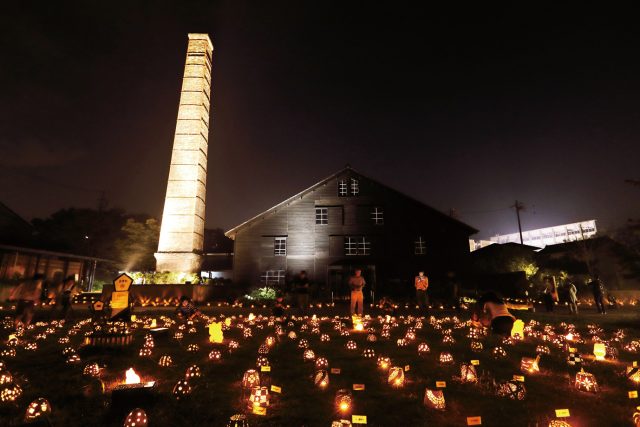
The 2019 Ceramics and Lights event (Photo courtesy of INAX Museums)
The founder’s idea that “a company is a public institution of society” continues to be passed on to future generations through this museum, which initiates activities with an awareness of contributing to society.


