



The future of corporate museums as a PR asset #10 TOTO Museum
 2023.07.04
 2026.05.23
Corporate museums are part academic and business and occupy the grey zone in between. It is an organization that works with several departments in a company including public relations, branding, advertising, and HR. This series aims to look at the role, function, and future of museums run by corporations through interviews with PR professionals.
“Kindness must always come first”—The TOTO philosophy seen through a museum
A corporate museum is the ultimate form of owned media. No place fits that description more perfectly than TOTO Museum. TOTO Museum depicts its brand story through all kinds of spaces, including real, virtual, and online. The exhibits and guides’ explanations vividly tell the thoughts of TOTO’s founder and the passion and struggles of its researchers. Visitors have their hearts shaken and find themselves becoming fans of the company. Here, we take a look at how TOTO Museum, a landmark of the company’s birthplace of Kokura, communicates the TOTO brand across the world.
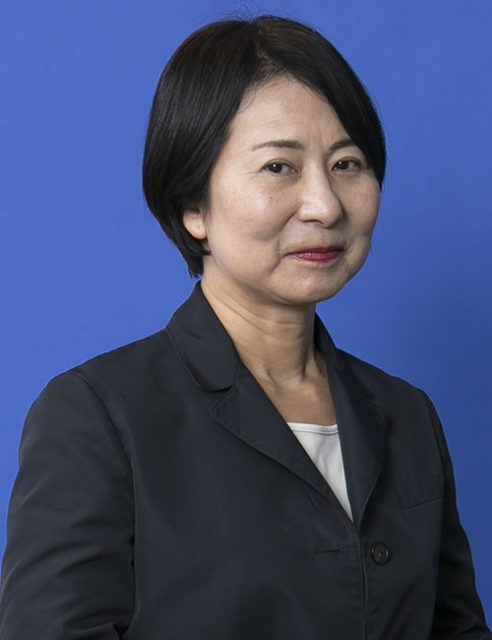
Kyoko Fujii, PR Consulting Dentsu Inc.
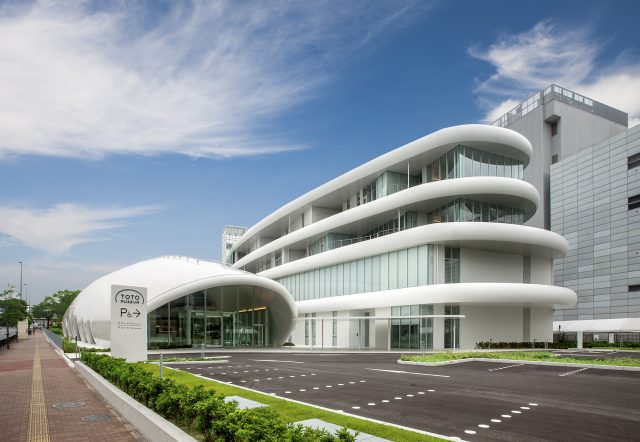
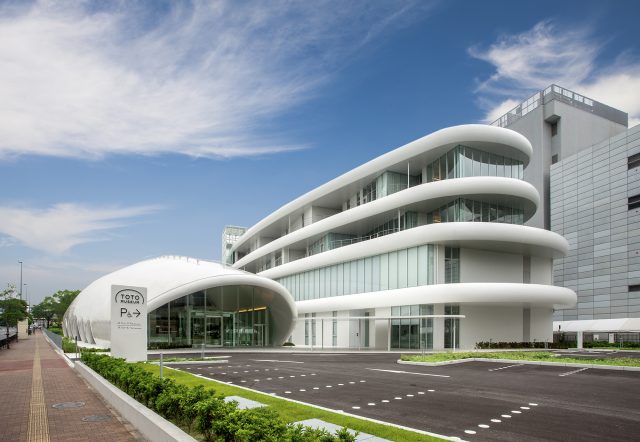
Exterior of TOTO Museum (Photo courtesy of TOTO)
TOTO Museum stands on the corner of TOTO Kokura Plant No. 1 in TOTO’s birthplace of Kitakyushu. It was opened in August 2015 as part of the celebration of the 100th anniversary of the company, founded as Toyo Toki Company, Limited in 1917 at the same time the Kokura Plant was built.
Water enriching the land
The museum consists of two white buildings that resemble ceramics. TOTO started off developing seated flush toilets and went on to expand into businesses related to plumbing. The design of the curved building on the left side of the entrance is a nod to this and signifies a waterdrop.
The four-story building on the right signifies verdant land. It is designed with a land motif, filled with TOTO’s belief that from now on, we must think about the earth’s environment. Together, they signify water enriching the land and express TOTO’s desire to contribute to the creation of verdant environments across the earth through its plumbing-related businesses.
Implementing the 100 environment-friendly measures
TOTO Museum is designed to be environmentally friendly. It has implemented 100 environment-friendly measures that use the latest technologies and expertise in seven categories: water saving, heat control, energy saving, recycling, ecology, maintenance, and air control. Implemented in conjunction with the 100th anniversary, the 100 environment-friendly measures put TOTO’s vision for the environment into practice not just through words, but through the entire building, including the toilets, lighting, walls, plants, and more. Incidentally, the building received the BCS Prize, which recognizes outstanding buildings in Japan, in 2017.
Conscientious hospitality
The first floor of the museum contains a showroom while the second floor consists of exhibitions. When you take the elevator to the second floor, the first area you enter is where the staff gather every morning one hour before the museum opens to do their morning assembly.
“Good morning, 15 degrees, one, two, three.”
“Please, 30 degrees, one, two, three, four.”
“Thank you, 45 degrees, one, two, three, four, five.”
At the morning assembly, all of the staff, not just the guides who interact with guests, practice bowing, checking what angle to bow at and for how long for different situations.
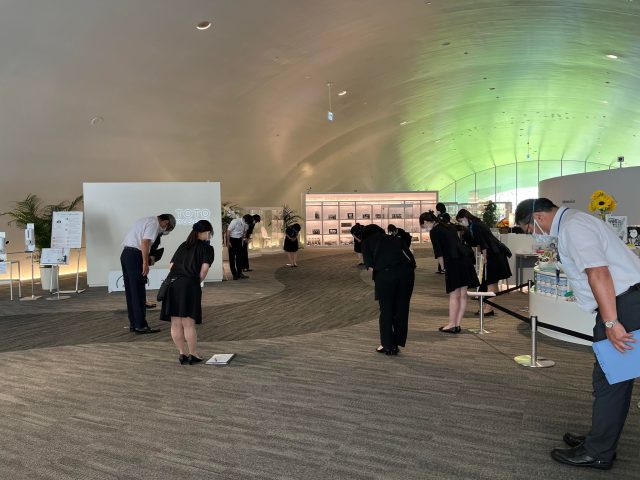
Morning assembly at 9:00 every morning (Photo by the author)
Bowing is an important form of nonverbal communication in Japan. At this museum, each day begins with checking that the gesture is performed properly. The staff then communicates the schedule for the day and other information so that when the museum opens at 10:00, the guests’ visits will go smoothly.
TOTO Museum is listed in tourism guides as a recommended tourist spot, and it is always one of the top-ranking establishments in Kitakyushu on guest review site Tripadvisor. The guides have meticulously prepared different explanations suited for guests with their different objectives, including tourists, building contractors and other business partners who come to observe, employees from Japan and abroad who come to study, local elementary school students and other students on field trips, and more.
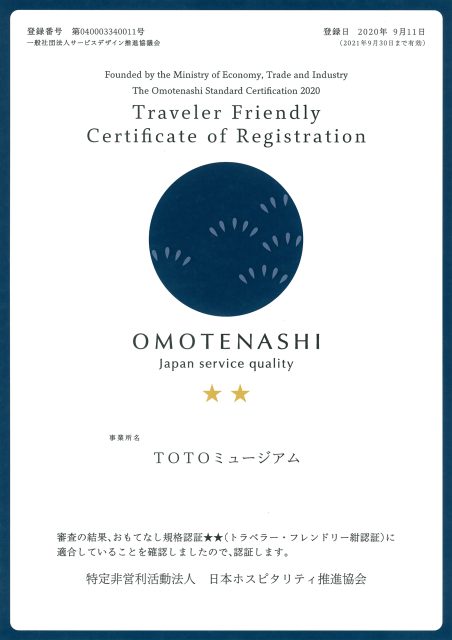
The staff at the museum continuously strives to improve their services using feedback from guests and employees alike with the customer service philosophy of “creating TOTO fans across the world and growing with the spirit of hospitality.” The museum was recognized for its conscientious hospitality and received a Traveler Friendly Certificate of Registration from the Omotenashi Standard Certification 2020 of the Ministry of Economy, Trade and Industry.
Start of the 3D virtual museum
TOTO Museum saw about 65,000 visitors in 2019, before the COVID-19 pandemic, and it reached a total of 400,000 visitors in May 2022. The number stagnated around 31,000 in 2021 due to the pandemic. The museum started online tours in May of that year and also opened a virtual museum in June 2022. The virtual museum contains 3D scans of the actual building’s interior, providing realism. It is easy to navigate so guests can visit whenever they want from the comfort of their living room.
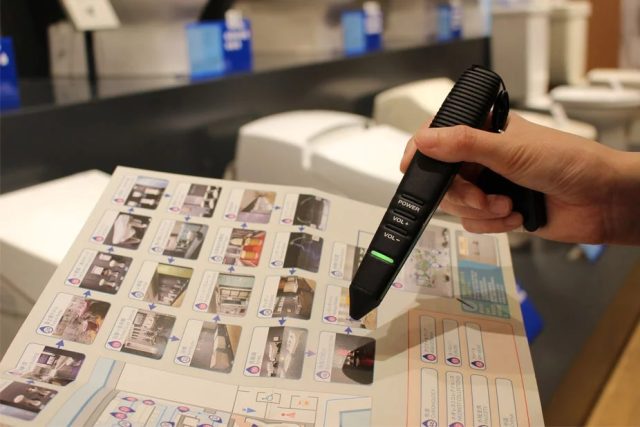
There were many visitors from abroad before the pandemic, and the museum began using audio guides with explanations for each exhibit in multiple languages in April 2019. There were audio guides prepared in Japanese, English, Chinese, and Korean, as well as audio guides for children (in Japanese only). Guests are able to listen to voice recordings by placing the audio guide against spots indicated in the pamphlet.
TOTO’s roots
TOTO Museum has three permanent exhibition rooms. The first one features TOTO’s history and tableware that TOTO was involved with for about fifty years after its founding. TOTO’s roots are in a trading company called the Morimura Gumi. The founder, Kazuchika Okura joined the Morimura Gumi after he graduated. Around that time, he visited Europe with his father, Magobe, who was part of the company’s management and aimed to enable hard-paste porcelain production in Japan. Kazuchika believed that Japan would someday have an age of sanitary ware (e.g., bathtubs, sinks, toilets, washbowls).
Although he was not an engineer, he passionately endeavored to enable the production of sanitary ware in Japan, as all of it was imported at the time. In 1912, he started a ceramic manufacturing laboratory with his private funds as an organization part of Nippon Toki Co., Ltd. (now Noritake Co., Ltd.), which the Morimura Gumi established in Nagoya. This was during a time when few places had a sewage system, and there were no seated flush toilets produced in Japan. Japan began importing sanitary ware produced overseas in the early 1900s, but they were not commonplace.
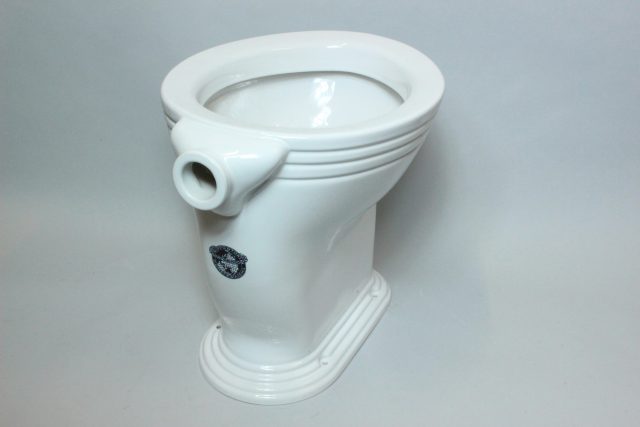
First seated flush toilet produced in Japan (reproduction) (Photo courtesy of TOTO)
The first seated flush toilet produced in Japan was successfully developed in 1914. In 1917, Toyo Toki Company, Limited, now TOTO, was founded. At the time of its founding, its production and sales were both poor. Because sewage systems and other infrastructure were largely missing, there were few orders for sanitary ware, and it supported the management of Nippon Toki’s tableware business while waiting for demand for sanitary ware to increase.
Japan’s living conditions changed drastically after the Great Kanto Earthquake and World War II due to special demand for the reconstruction and sudden modernization. Demand for plumbing instruments increased. In addition, TOTO expanded its sights from plumbing instruments to plumbing spaces, and the company climbed its way up to become one of the top housing equipment manufacturers in Japan and is trusted in countries across the world.
The TOTO Philosophy
The second exhibition room features Japan’s plumbing culture and history, the thoughts of TOTO’s predecessors who laid down its cornerstones, and the changes in plumbing products manufactured by TOTO. The exhibits include representative sanitary ware and other items that depict its evolution over the ages, TV commercials that aired in the past, and more. As soon as guests enter, they are greeted with a section titled TOTO Philosophy, where letters from the first president, Kazuchika Okura, to the second president are displayed.
Words of the predecessor
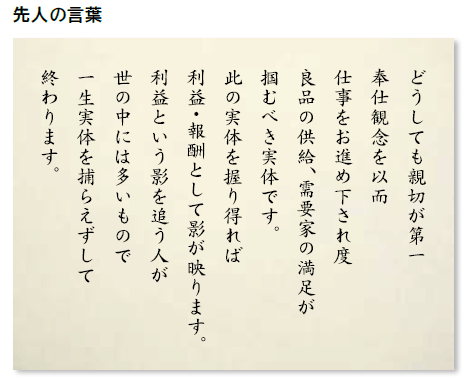
Written are the thoughts, “Kindness must always come first. Your goal should be to provide good products and satisfy the customer. Accomplish that, and profit and compensation will follow.” The “must always” in particular gives off the writer’s strong emotions. These words from the first president resonate as vividly as ever even after 100 years, and they serve as the unwavering foundation of TOTO’s management philosophy. This philosophy has been treasured by generations of presidents, the museum, and the entire company.
The stories told by the exhibits
Displayed further inside the second exhibition room is Japan’s first prefabricated bathroom module (based on JIS provisions), sent to Hotel New Otani in 1964.
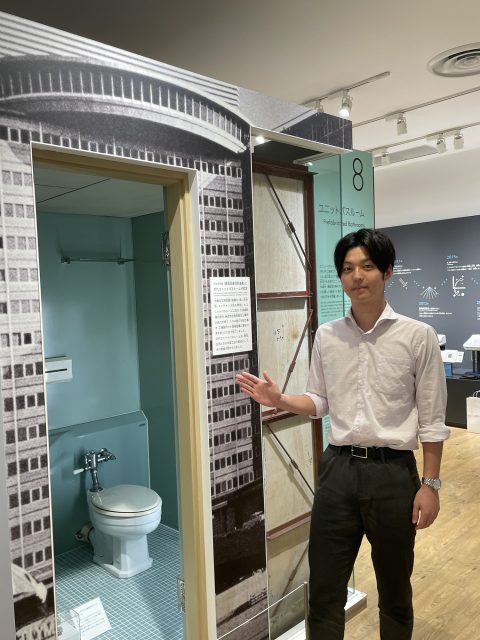
Taku Miyazoe from TOTO’s PR department explaining Japan’s first prefabricated bathroom module (Photo by author)
Prior to the 1964 Tokyo Olympics, hotels were built one after another in Tokyo. One of them was Hotel New Otani, built at the request of the government to provide accommodations for foreigners visiting Japan. Taisei Corporation, the contractor in charge of the construction, approached TOTO about developing a bathroom around May 1963. There were only one and a half years until the Olympics, and the construction had to be completed in an extremely short amount of time.
It was Japan’s first high-rise hotel, with 17 stories and 1,058 rooms. Construction would normally take three years, but the company had less than half that time, only 17 months. In addition, there was a shortage of workers because of the surge in construction in preparation for the Olympics. Under these severe conditions, there was not enough time to complete using conventional construction methods. To solve the problem of the time shortage, the prefabricated bathroom module was invented. A frame for the waist down and upper wall frame with built-in instruments and water pipes were assembled in advance in a factory, then raised by a crane and embedded into buildings, drastically reducing construction time.
In addition, the bathtub and sink counter were both made of fiber-reinforced plastic, making them lighter and easier to transport. Thanks to various designs and new technologies, Hotel New Otani was completed right before the Olympics. The exhibit looks ordinary at first glance, but the prefabricated bathroom module contains many stories. Behind the national project that was the Olympics, there is a story of the struggles and passion of the company’s predecessors who applied all of their knowledge to somehow meet expectations and make the impossible possible.
Becoming TOTO for each country
The third exhibition room features products sold by TOTO in various countries across the world. Here, guests can learn what kinds of developments were made in each region abroad.
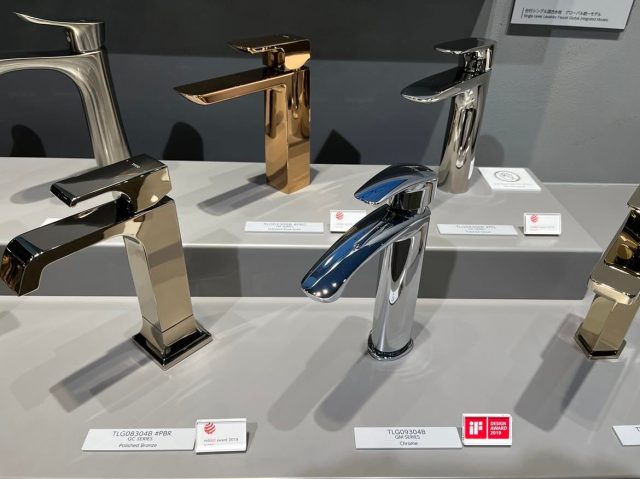
Rows of faucets that won awards such as the Red Dot Design Award and iF Design Award (Photo by author)
TOTO’s first success abroad was because of a water shortage in California, the United States. The federal government established the Energy Policy Act of 1992, which restricted the amount of water used by toilets manufactured from 1994 onward to no more than 1.6 gallons (about 6 liters) per flush. When the Act was established, TOTO took the lead and began selling a 6-liter toilet in 1988. The toilet had a tank installed on top of the bowl.
The one-piece toilet, which combined the bowl and the tank, was especially popular in the United States for its design. Other manufacturers began selling 6-liter one-piece toilets to comply with the Act, but they were siphonic toilets. When these toilets do not have enough water, their flushing power decreases, and they have difficulty creating a siphon effect and flushing waste. Many of them did not flush well, and there were people who claimed that flushing with only six liters was not realistically possible. In order to address the situation, TOTO researched in depth the mechanisms that caused the siphon effect and made countless prototypes. The company developed a one-piece toilet that barely contained six liters and began selling it in the United States in 1997.
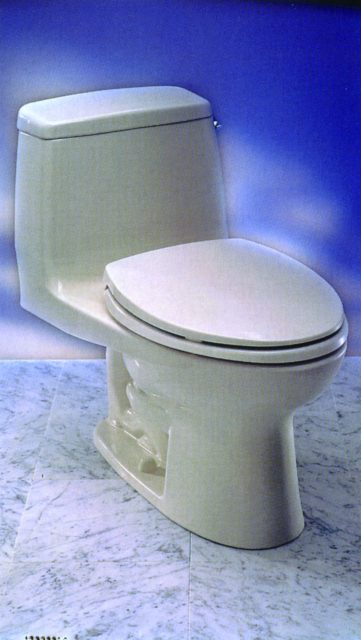
6-liter one-piece toilet developed for the United States (Photo courtesy of TOTO)
The National Association of Home Builders gathered toilets from different companies and studied whether six liters is enough to completely flush waste. They found that the three products that flushed the best were all TOTO products. The results of the study were featured on news programs across the United States, making a strong impact on the U.S. market. In the same way TOTO developed the toilet in the United States, it develops the best products for each country and always aims to become “TOTO for each country.”
“Kindness must always come first”
As these examples show, each product exhibited at TOTO Museum has its own story. There are stories about modernizing Japan, better understanding the company, and meeting demands of different countries. Behind each exhibited item are the struggles and thoughts of the predecessors, which the guides communicate to guests through words. Everywhere, we could feel a connection to the words of the first president, “Kindness must always come first.” People who come here are deeply impressed as they come into contact with the thoughts of the founders in various places throughout the museum and discover the stories behind the products.
The museum truly fulfills its customer service philosophy of “creating TOTO fans across the world and growing with the spirit of hospitality.” If you ever go to Kokura, definitely visit in person and listen to the guides’ explanations and the stories told by the products.


