



The future of corporate museums as a PR asset #09 NYK Maritime Museum
 2023.06.20
 2026.05.23
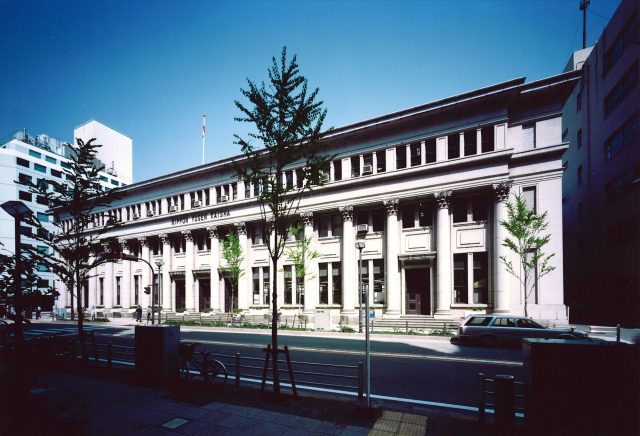
NYK Maritime Museum tells the story of how maritime shipping made Japan into a trade superpower
Akemi Sakurai, PR Consulting Dentsu Inc.
Corporate museums are part academic and business and occupy the grey zone in between. It is an organization that works with several departments in a company including public relations, branding, advertising, and HR. This series aims to look at the role, function, and future of museums run by corporations through interviews with PR professionals.
Nippon Yusen Kaisha (NYK) is a pioneer in Japan’s maritime shipping industry. The items housed and on display at its NYK Maritime Museum are not only relics from their past but include historical artifacts from modern Japan’s maritime transportation industry. The museum also aims to disseminate its maritime thought.
The ideal Yokohama sightseeing course takes visitors to Minato Mirai, across Bentenbashi at Sakuragicho Station and down Yamashita Koen Dori, Yamashita Futo, Motomachi, Harbor View Park, and around the Yamato Seiyoukan walking path. On Kaigan Dori, there are three symbolic towers. Along with the king (Kanagawa Prefectural Government Office) and queen (Yokohama Customs) proudly stands NYK Maritime Museum.
Spokesperson Naoko Iwakuma says, “Japan is an island that lacks resources essential to life and industry. Most of the country’s food, oil, gas, and iron ore are imported and more than 90% is done so by sea. Maritime transportation plays a vital role for Japan.”
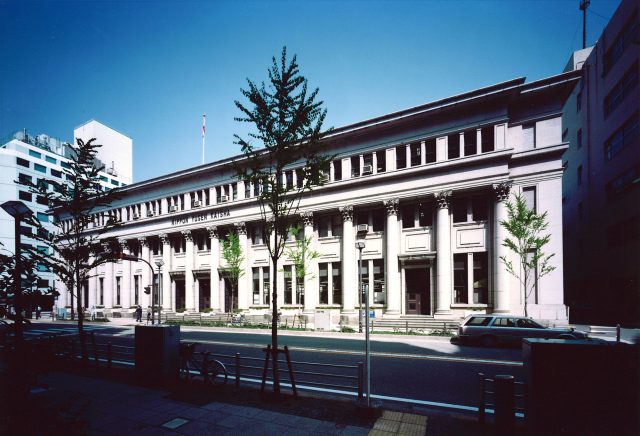
NYK Maritime Museum is located in a Renaissance-style Corinthian order building
Photo source: NYK Maritime Museum
Note: NYK Maritime Museum is closed for renovations until October 2026 (tentative).
In 1936, after the Great Kanto Earthquake, Nippon Yusen Kaisha (NYK) opened its Yokohama branch office. The current museum’s predecessor, NYK Historical Museum, was opened in 1993 at facility once used by NYK as a warehouse. In June 2003, NYK relocated the museum to the first floor of its branch office to attract more visitors because it is located on a busy street and renamed it NYK Maritime Museum. The museum houses and preserves historical artifacts, provides information to researchers, conveys Kaiji Shiso, educates NYK staff, and contributes to society.
*Kaiji Shiso: Knowledge about ocean usage, traffic, environment, safety
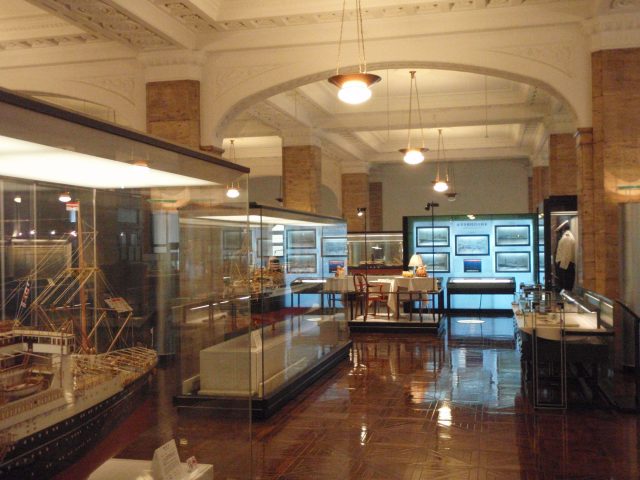
Artifacts are organized in nine sections by era or theme
Photo source: NYK Maritime Museum
Target audience and departments at work
Targeting the public at large, from school groups learning about the world to new graduates who joined one of NYK’s group companies, the museum tells the story of the role Japan’s maritime transportation played in people’s everyday lives through objective facts.
Situated conveniently in the heart of Yokohama, NYK Maritime Museum hosts many visitors from across Japan and abroad. Some out-of-prefecture schools stressing maritime education have incorporated a visit to the museum into their curriculum and students and educators from merchant marine and oceanography schools are admitted free of charge.
Corporate Communication Group is in the Management Planning Headquarters and the General Affairs Headquarters handles PR for the Museum and Hikawa Maru. Notices for special exhibitions and events are handled along with the Corporate Communication Group. Additionally, there are many cases of the Human Resources Group and ESG Management Promotion Group working together.
A wish for peace to pass down to future generations
The first thing that comes into view as you pass by the information desk is a sculpture by Seibo Kitamura, sculptor of Peace Statue at Nagasaki Peace Park, dedicated to NYK employees who lost their lives in the line of duty during the war. Susumu Akeno, vice director, says, “NYK lost 5,312 employees during the Pacific War. The military probably didn’t realize the importance of cargo ship escorts back then.”
During the war, most of Japan’s merchant ships were requisitioned to transport goods and personnel and often became targets of the enemy. As a result, many lives were lost along with the ships. In the industry, about 60,000 people lost their lives. That is 43% percent of seamen , or 2.6 times more likely than personnel in the navy. Susumu Akeno adds, “The United States’ strategy was to sink merchant ships to isolate the Japanese islands.” At the museum, photos of 185 NYK ships lost during the war are on display. The only ship to survive was Hikawa Maru, moored at Yamashita Park since being retired after the war, which was requisitioned as a naval hospital ship.
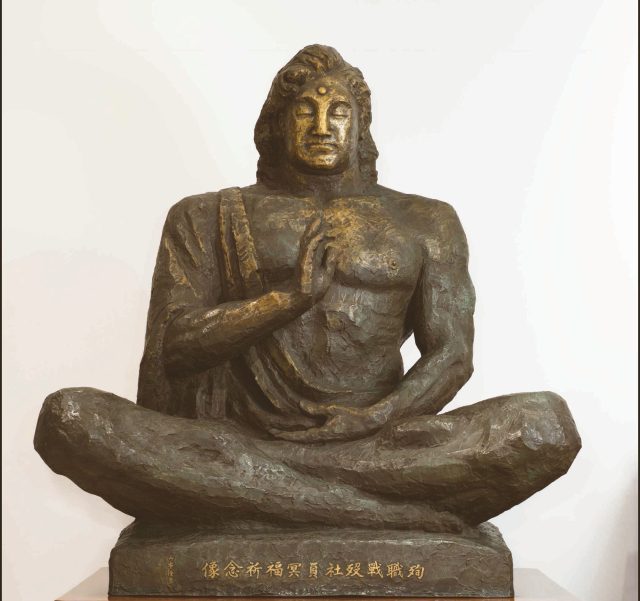
Peace Statue dedicated to NYK employees who lost their lives in the line of duty during the war
Photo source: NYK Maritime Museum
Enlightenment and the dawn of maritime transport
NYK’s history goes hand in hand with Japan’s opening of her ports to the rest of the world, modernization, and wars.
In 1871, Mitsubishi Group founder Yataro Iwasaki took over the reins of Tsukumo Trading Company, a shipping company founded by the Tosa domain (present-day Kochi Prefecture). The Tensui-Oke rain barrel is the main item on display in the Opening Japan section of the museum. The barrel features a Mitsubishi logo, which is a combination of the Iwasaki family crest of three overlapping lozenges and the crest of the Tosa domain ruler Yamanouchi clan’s crest of three oak leaves, that is slightly more slender than the one used today.
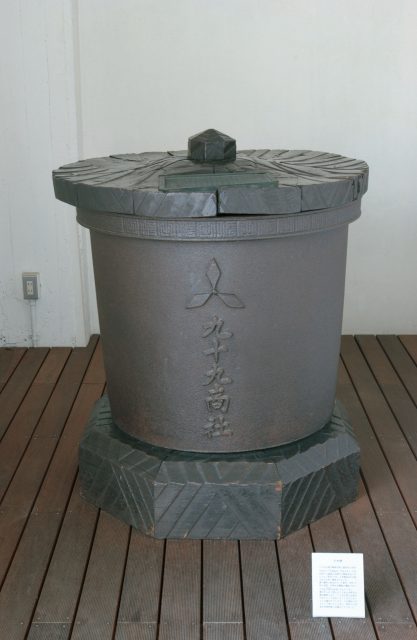
Tensui-Oke rain barrel
Photo source: NYK Maritime Museum
One of the keys of the museum is the amount of archival footage it houses. On the floor, there is a switch stylized like a compass. When triggered, an explanation begins, highlighted by photographs of Yataro, his brother and successor Yanosuke, as well as later Mitsubishi Group executives.
When Japan opened its ports, the country still only had small sailboats. When western countries arrived on the shores in their 3000 tonnage steam ships, it took the country by storm. Modernizing the maritime transportation was already a priority for the Meiji government but it was pushed to the forefront during the Taiwan expedition in 1874. Yataro was tasked by the government to transport troops. Minister of Finance Shigenobu Okuma and Lord of Home Affairs Toshimichi Okubo were impressed with his work and Yataro was able to grow the company. In 1875, Mitsubishi Shokai, renamed Tsukumo Trading, opened a weekly liner service to Shanghai.
In 1875 at the behest of the government, the company established Mitsubishi Nautical School to train executive-class seamen. According to archival photos, a ship moored at the mouth of Sumida River served as the learning house for the British-styled school and students quartered in its cabins. After the war, the school was renamed University of Mercantile Marine, and later merged with Tokyo University of Fisheries to become what is now Tokyo University of Marine Science and Technology.
The Birth of Nippon Yusen Kaisha
It was not smooth sailing for Yubin Kisen Mitsubishi Kaisha (Mitsubishi Mail Steamship Company),renamed from Mitsubishi Shokai as it lost government backing with the assassination of Toshimichi Okubo and ouster of Shigenobu Okuma, as well as activities by anti-Mitsubishi factions. The government-backed semi-governmental Kyodo Unyu Kaisha created a price war that nearly bankrupted both companies. After three years of cut-throat competition, during which Yataro died and was succeeded by his brother Yanosuke, the government and arbitrated a merger that created NYK.
After NYK was born, Yanosuke ceded the maritime shipping business and began creating businesses that would become central to the Mitsubishi Group. “The Birth of NYK” section of the museum features exhibits spotlighting several historical figures who helped create modern Japan.
Opening Japan
NYK was born in 1885 and launched the Nagasaki-Tianjin route the following year. In 1893, the company launched Japan’s first long distance liner service to Bombay (Mumbai) and importing cotton and continued to aggressively explore new routes and businesses.
A year after christening the Bombay route, the Sino-Japanese war broke out and like other shipping companies, NYK’s ships were drafted into service. Fortunately, the company and its fleet did not suffer major damage but was not so lucky ten years later during the Russo-Japanese war when ships and crew were lost.
Among the items displayed is Yusen Zue magazine from 1901 that depicts life during that time and interior of NYK’s ship. A scribe from Toyodo’s Fuzoku Gaho reported on his trip on the Kasuga Maru along with illustrations.
Arrival of Luxury Liners
Among the most popular exhibits are the models of luxury liners. These ships were a bright light in the early Showa era for many who had struggled through the depression after the conclusion of the first World War.
On display are 1:48 scale builder’s models that are given to ship owners by the ship builders. The 17,000-ton Asama Maru was an ocean liner that made trips to San Francisco and made by Mitsubishi Shipbuilding & Engineering’s Nagasaki shipyards. Another model on display is the passenger and cargo transport liner Hikawa Maru, the only surviving pre-war ship. Built in 1930 at a shipyard in present-day Minato Mirai in Yokohama, the liner entertained distinguished passengers like Their Imperial Highness Prince and Princess Chichibu and Charlie Chaplin. According to curator Akane Endo, “You can tell how much effort NYK put into promotion when you see the print and paper quality of the pamphlets.”
The Nitta Maru, Yahata Maru, and Kasuga Maru are sometimes collectively referred to as the Three Sisters because their initials spell out NYK. A poster showing three women depicting the ships was commissioned by painter Ryohei Koiso. Also exhibited are ship-shaped and fan-shaped pamphlets produced abroad, rare in its time.
NYK’s ships are known for the distinctive red stripes on a white background over a black funnel. This became the official funnel mark for NYK’s vessels around this time in 1929.
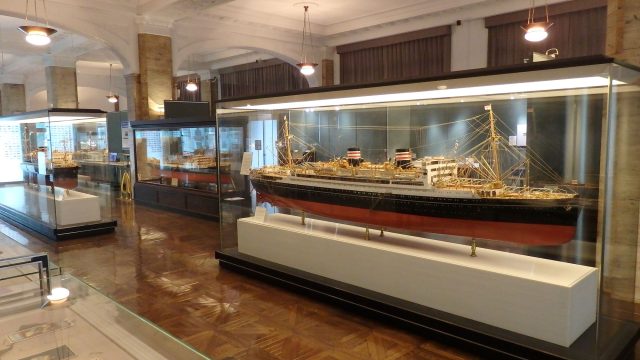
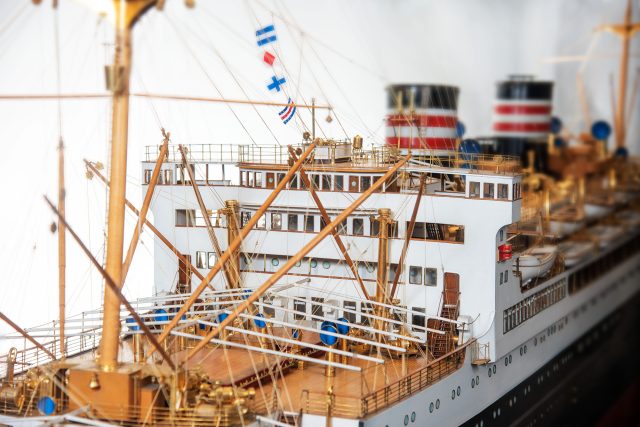
Model ships on display that have handmade replicas of outfitting, lifeboats, pulleys, and handrails
Photo source: NYK Maritime Museum
Recovery and Conversion to a Comprehensive Shipping Company
Japan lost the war, NYK lost most of its ships and much of its crew, and wartime compensation for requisitioned vessels ended. General Headquarters, Supreme Commander for the Allied Powers (GHQ) took over the headquarters and the Yokohama Yusen Building that would later house the NYK Maritime Museum, forcing the company to rebuild from the ground up. GHQ was initially weary of re-armament and strictly regulated maritime transport until the onset of the Cold War forced them to ease restrictions.
Along with heavy industries, maritime transport grew rapidly and supported Japan’s transformation into an economic superpower. Cargo ships on liner service became fully containerized ships, while tramp service consisted of specialized ships for transporting automobiles, liquid natural gas (LNG), and so on. NYK transformed itself to a multi-modal maritime transport company.
The environment and maritime transport
Our next challenge is how we can operate environmentally friendly ships. The museum regularly has history-, art-, and company-themed exhibits. One exhibition showcasing ship navigation technology introduced eco-friendly innovations from group companies.
NYK has always adapted to the times and supported Japan’s growth through maritime transport. As the world presents the next challenge, the company is ready to face it head on.
The lucky Hikawa Maru
A short walk from NYK Maritime Museum is Hikawa Maru. Hikawa Maru was the only large Japanese ocean liner to survive World War II and has been moored at Yamashita Park in Yokohama since 1961. In 2016, the ship was designated as a Nationally Important Cultural Property by the Ministry of Education, Culture, Sports, Science and Technology and has become a destination for children in Yokohama for school trips and off-campus learning.
The first-class cabins, dining saloon, and lounge make it feel like you are on a voyage across the sea. Hikawa Maru was christened after Omiya Hikawa Shrine in Saitama Prefecture. Originally a cargo-passenger liner, the ship requisitioned to serve as a hospital ship during the war, transported repatriated Japanese citizens for five years after the war, and then returned to a cargo-passenger liner in 1960. In all, Hikawa Maru transported 90,000 people. Current Hikawa Maru Captain Takatoshi Ouchi said, “I make sure to visit Hikawa Shrine and pray for the safety of all of our guests and Hikawa Maru, as well as prosperity of NYK.”
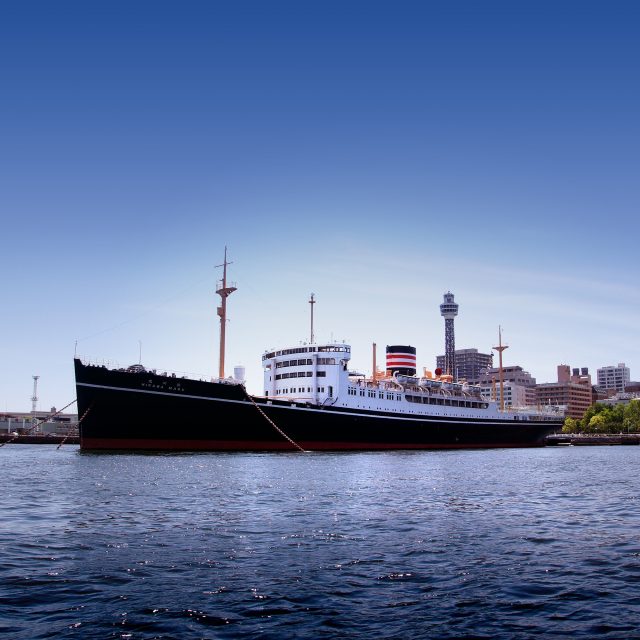
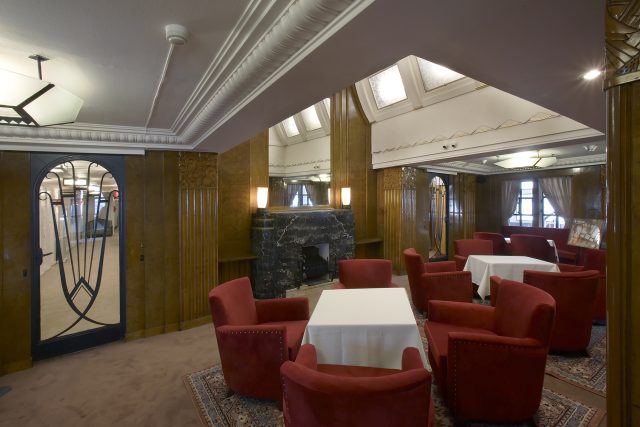
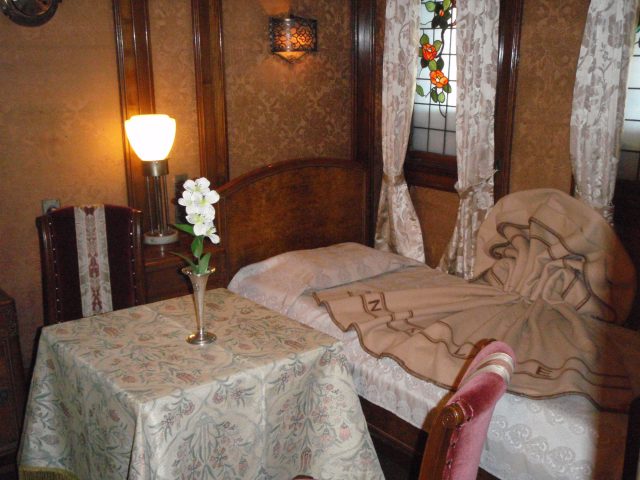
The art deco-style interior of the first-class lounge was designed by French craftsman Marc Simon, and the interior of the special first-class room was designed by Kawashima Textile Co., Ltd., founded by Jinbei Kawashima.
Photo source: NYK Maritime Museum
Hikawa Maru and the local community
Before the COVID-19 pandemic, Hikawa Maru opened its doors to the public every year on Marine Day. “At the museum, with the help of the Marine HR Team, we host a workshop where young members of the crew show how to make boats using blocks,” says Curator Endo. According to her, children are excited to see the crew in their uniforms and hear about their work on the ships and enthusiastically ask questions.
The museum also hosted concerts, lessons on drawing marine charts, and papercraft classes for children prior to the pandemic. Hikawa Maru also provided a place to rehearse to the Yokohama Boys and Girls Choir and had them on hand to perform for events. The museum and Hikawa Maru also hosted an art competition for elementary school-aged children.
Postscript
Not many people work in maritime transport or travel by sea, but our lives are supported by the maritime transport. NYK Maritime Museum and Hikawa Maru is playing a major role in educating people on that relationship. I hope many people take the opportunity to visit the museum and learn about NYK’s achievements.


